Understanding the Social Structure of a Wolf Pack
Wolves are among the most socially complex mammals, living in groups known as packs that function as cooperative family units. The social structure of a wolf pack has long been a subject of scientific study, often described in terms of dominant and subordinate relationships. Understanding how wolves organize themselves, communicate, and cooperate offers insights into their survival strategies and ecological roles. This article explores the layers of hierarchy, the roles of individual members, and the mechanisms that maintain cohesion within the pack.
Contrary to popular belief, the traditional model of a rigid “alpha” hierarchy has been refined by modern research. Observations of wild packs reveal that the social order is more fluid and context-dependent than once assumed. Rather than a constant struggle for dominance, pack dynamics are shaped by family bonds, age, experience, and situational needs. This perspective shifts the focus from competition to cooperation, highlighting how wolves rely on shared decision-making and mutual support to thrive in their environments.
The Hierarchical Framework Within a Pack
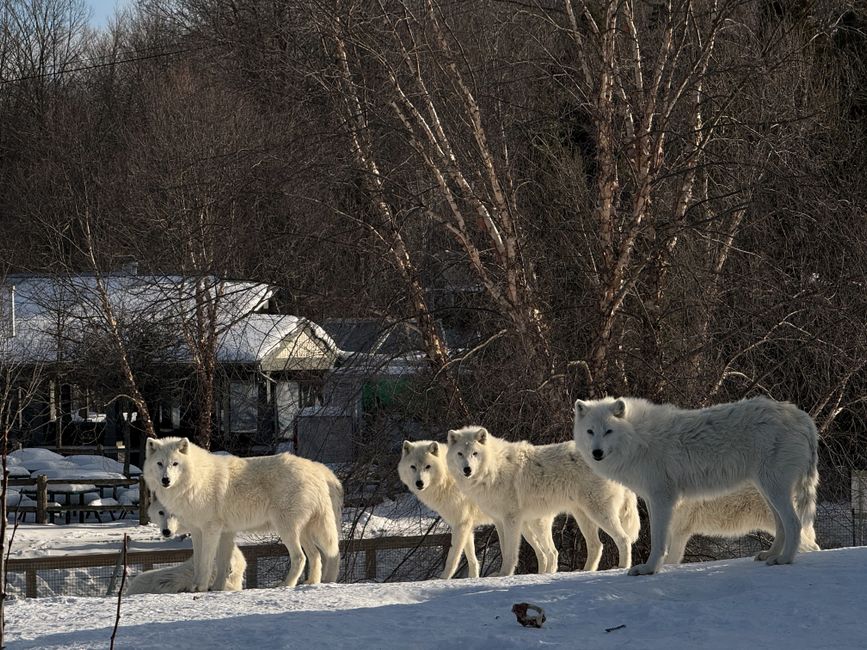
A wolf pack typically consists of a breeding pair, their offspring from multiple years, and occasionally unrelated individuals that have been accepted into the group. The breeding pair, often referred to as the alpha male and female, usually lead the pack in terms of decision-making during hunting, territory defense, and movement. However, their authority is not absolute; it is maintained through a combination of respect, experience, and the consent of other members.
Below the breeding pair, the pack includes individuals with varying levels of social standing. Subordinate wolves may be older offspring that help raise younger pups, or younger wolves that gradually learn the skills needed for survival. The beta wolf, often a second-in-command, may step in when the alpha is absent or assist in coordinating group activities. At the lower end, the omega wolf holds a submissive role, often acting as a tension diffuser within the group. This hierarchy is not static; it can shift due to age, injury, or changes in pack composition.
Hierarchical structures are most visible during feeding times or when the pack is under stress. Dominant wolves typically eat first, but in many packs, young pups are allowed to feed before even the adults, reflecting the pack’s investment in the next generation. Such observations underscore that rank does not always equate to privilege; rather, it serves a functional purpose in maintaining order and resource allocation.
Communication: The Glue of Pack Cohesion
Wolves rely on a sophisticated system of vocalizations, body language, and scent marking to convey information and reinforce social bonds. Howling is perhaps the most iconic form of communication, serving to assemble the pack, signal location, or warn other packs to stay away. Each wolf’s howl is unique, allowing individuals to recognize one another even from a distance.
Facial expressions and body postures are equally important. A dominant wolf may hold its tail high and maintain direct eye contact, while a submissive individual will lower its body, tuck its tail, and avert its gaze. These signals help prevent conflicts and clarify intentions without escalating to physical aggression. Playful behaviors, such as bowing or gentle nipping, reinforce social bonds, especially among younger members.
Scent marking through urine and feces provides a chemical layer of communication. Wolves mark their territory boundaries, trails, and key resources, leaving information about pack identity, reproductive status, and recent activity. This olfactory communication allows packs to maintain spatial boundaries and reduce direct confrontations with neighboring groups.
Cooperative Hunting and Resource Sharing
Hunting is a prime example of how social structure facilitates cooperation. Wolves typically target prey larger than themselves, such as elk, moose, or bison. Successful hunting requires coordination, strategy, and the ability to act as a cohesive unit. The pack does not rely on a single leader to dictate every move; instead, individuals adjust their roles based on the terrain, prey behavior, and the pack’s current composition.
During a hunt, some wolves take on the role of drivers, steering the prey toward other pack members positioned for an ambush. Others act as chasers, using endurance to wear down swift prey. Older, more experienced wolves often lead the initial approach, while younger members learn through observation and participation. This division of labor reduces risk and increases the likelihood of a successful kill.
After a kill, the pack shares the meal in a relatively orderly manner. Dominant wolves may claim the choicest parts, but they also ensure that pups and less dominant members receive nourishment. In times of scarcity, the pack may temporarily split into smaller groups to search for food, demonstrating flexibility in their social arrangements. This adaptability is key to surviving in environments where prey availability fluctuates.
Raising Pups: A Shared Responsibility
Pup rearing is a collective effort within the wolf pack. The breeding pair may be the biological parents, but other members—often older siblings or related adults—assist in guarding, feeding, and teaching the young. This cooperative breeding strategy increases pup survival rates and strengthens social bonds across generations.
Pups are born in a den, where they remain for several weeks under the protection of the pack. Adult wolves bring food to the den and take turns staying with the pups while others hunt. As the pups grow, they begin to explore the area around the den, with pack members supervising and gently correcting their behavior. Play-fighting and stalking games help develop motor skills and social understanding.
Eventually, the pups join the pack on short forays, learning how to navigate the territory, recognize signs of danger, and participate in group activities. The entire pack invests in the education of the young, as their survival directly impacts the pack’s long-term stability. This communal approach means that even if the breeding pair is lost, other members may adopt the pups and continue their upbringing.
Adaptability and Flexibility of Pack Dynamics
No two wolf packs are identical, and the social structure can vary significantly based on environmental pressures, prey density, and human influences. In areas with abundant food, packs may be larger and more tolerant of outsiders. In harsh conditions, packs may be smaller and more tightly knit, with a stricter hierarchy to conserve resources.
When a pack loses a key member, such as the alpha male or female, the remaining wolves may reorganize quickly. Subordinate wolves may step into leadership roles, or the pack may dissolve and individuals may join other groups. This fluidity ensures that the social system remains resilient. Wolves also exhibit a phenomenon known as pack splitting, where a subset of individuals breaks away to form a new pack, often led by a younger couple. This process helps disperse the population into new territories and reduces inbreeding.
Human activities, such as habitat fragmentation or hunting, can disrupt natural pack dynamics. Wolves may alter their movement patterns, change hunting strategies, or modify their social bonds in response. Understanding these adaptive behaviors is important for conservation efforts, as it highlights the need to protect not only individual wolves but also the social networks that sustain them.
Observing wolf packs in the wild reveals that their social structure is far more nuanced than a simple dominance ladder. The interplay of cooperation, communication, and shared responsibility allows wolves to function as a cohesive unit capable of tackling challenges that would be impossible for a solitary animal.
Research continues to refine our understanding of wolf sociality. New technologies, such as GPS tracking and remote cameras, provide unprecedented data on movement and interaction patterns. These tools allow scientists to observe pack behaviors without human interference, leading to more accurate interpretations of hierarchy and cooperation. As knowledge accumulates, the picture of wolf society becomes richer and more complex, emphasizing the importance of context and individual variation.
For those interested in wildlife ecology, the wolf pack offers a compelling case study in social evolution. By exploring how wolves organize, communicate, and cooperate, we gain insights into the broader principles that govern group living among carnivores. The social structure of a wolf pack is not merely a set of roles; it is a dynamic system shaped by necessity, environment, and the bonds between individuals.